

From the Sensex pack, ITC, Titan, Asian Paints, Reliance, Tata Steel, Bajaj Finserv, Axis Bank, Hindustan Unilever, Infosys, Bajaj Finance, Nestle and ICICI Bank were the major gainers. Kotak Mahindra Bank, Mahindra & Mahindra, HCL Technologies, State Bank of India, Bharti Airtel and Tata Motors were among the laggards.
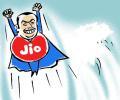
Billionaire Mukesh Ambani's Reliance Jio is India's strongest telecom brand in India, ahead of Bharti Airtel and Vodafone Idea Ltd, according to brand intelligence and data insights company TRA. TRA, formerly Trust Research Advisory, in its 'India's Most Desired Brands 2022' ranked companies according to their brand strength. Reliance Jio topped the telecom category, followed by Bharti Airtel, Vodafone Idea Ltd and BSNL.
Supporting West Bengal Chief Minister, Buddhadeb Bhattacharjee's stand, Mittal said, "Let us see for the next 7-10 years what Indian companies deliver and then we can take a call."

Profit taking in Bajaj Finance, Nestle, Kotak Bank, SBI, Bharti Airtel L&T and Asian Paints also weighed on the benchmark index. Maruti bucked the trend by gaining 1.73 per cent after strong retails sales in September. Power Grid, M&M. JSW Steel and Tata Steel also advanced.

From the Sensex pack, Bharti Airtel, HDFC Bank, Titan, UltraTech Cement, ITC, Sun Pharma, Bajaj Finserv, Bajaj Finance, Hindustan Unilever and Kotak Mahindra Bank were among the major gainers. Tata Steel, Axis Bank, NTPC, ICICI Bank and IndusInd Bank were the major laggards.

At a time when the overall narrative is around India being an attractive investment destination, the two American multinationals are more specific in projecting India as their centrepiece.

Walmart is waiting to understand as to how much multibrand retail might or might not move forward.

The threat may be a decade away, but it has brick-and-mortar sellers rethinking their strategies and banking on the govt to regulate online companies.

RBI's exercise will take into account standards of governance, the viability of the payment bank (PB) business model, and changes, if any, if needed.
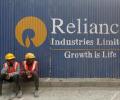
Reliance Industries Ltd was the biggest wealth creator during the five-year period from 2018 to 2023 while Adani Enterprises Ltd was the top all-round wealth creator, according to a study by Motilal Oswal Financial Services. The study, based on stock market performance of companies, said for the fifth time in succession, Reliance emerged as the largest wealth creator, adding Rs 9,63,800 crore wealth over 2018-23. It was followed by Tata Consultancy Services (Rs 6,77,400 crore wealth addition), ICICI Bank (Rs 4,15,500 crore), Infosys (Rs 3,61,800 crore) and Bharti Airtel (Rs 2,80,800 crore).

Titan, IndusInd Bank, Axis Bank, State Bank of India, Power Grid, NTPC and Tata Motors were among the among the major gainers. Mahindra & Mahindra, Larsen & Toubro, Nestle, JSW Steel, Infosys and Tata Consultancy Services, Tech Mahindra and Maruti were the major laggards.

Future, which recently tied up with Amazon in India to sell its fashion and food products exclusively on the American giant's marketplace platform, is looking at a gross merchandise value of about Rs 6,000 crore (Rs 60 billion) in the next three years from the venture.

Among the Sensex firms, Kotak Mahindra Bank, Asian Paints, Tata Consultancy Services, HCL Technologies, Infosys, Tata Steel, Wipro, Bajaj Finance, Tata Motors, Titan and Bajaj Finserv were the major laggards. In contrast, IndusInd Bank, ITC, Bharti Airtel, Maruti, UltraTech Cement, Mahindra & Mahindra and State Bank of India were the gainers.

The market capitalisation of BSE-listed firms jumped to an all-time high of Rs 304.53 lakh crore on Wednesday, buoyed by an unprecedented rally in equities where the BSE benchmark Sensex ended over the 67,000-mark for the first time ever. Rallying for the fifth day running, the 30-share BSE Sensex climbed 302.30 points, or 0.45 per cent, to end at its lifetime closing high of 67,097.44 points. During the day, it jumped 376.24 points, or 0.56 per cent, to reach its all-time intra-day peak of 67,171.38 points.

Kotak Mahindra Bank was the biggest loser from the Sensex pack, skidding 1.83 per cent, followed by Axis Bank, NTPC, Hindustan Unilever, ICICI Bank, Bharti Airtel, Reliance Industries, HCL Technologies, IndusInd Bank and Nestle. In contrast, Bajaj Finance, Bajaj Finserv, Tech Mahindra, Tata Consultancy Services, Titan, Infosys, HDFC Bank, HDFC and ITC were the gainers.

Benchmark equity indices Sensex and Nifty closed higher on Friday after two days of fall, helped by buying in metal, telecom and auto stocks amid a firm trend in global markets. Automakers led by Maruti Suzuki India, Hyundai, Mahindra & Mahindra reporting robust wholesales of passenger vehicles and GST collections crossing Rs 1.50 lakh crore for the third straight month in May also added to the optimism. The 30-share BSE Sensex climbed 118.57 points or 0.19 per cent to settle at 62,547.11.

While the investment amount could not be immediately ascertained, a report pegged it at about $2 billion.

However, in the last few sessions, the stock of Mukesh Ambani-controlled Reliance Industries Limited (RIL), hit its 52-week low level of Rs 2269.75, and has been one of the worst performers among the Sensex pack thus far in calendar year 2023 (CY23). Thus far in CY23, RIL has tanked nearly 11 per cent as compared to a fall of around 5 per cent in the S&P BSE Sensex. The fall in the stock, according to Gaurang Shah, senior vice-president at Geojit Financial Services is mostly due to the overall dip in the market sentiment, which in turn has impacted large-caps, including RIL.

Investors' wealth eroded by Rs 3.46 lakh crore on Wednesday as equity markets took a sharp tumble amid weak global trends and foreign fund outflows. The 30-share BSE Sensex fell by 676.53 points or 1.02 per cent to settle at 65,782.78. During the day, it plunged 1,027.63 points or 1.54 per cent to 65,431.68. In line with the weak trend in equities, the market capitalisation of BSE-listed firms eroded by Rs 3,46,947.54 crore to Rs 3,03,33,258.69 crore.
Benchmark equity indices Sensex and Nifty reversed their early gains to close lower on Wednesday due to selling in oil & gas, banking and IT stocks amid weak trends in European markets. The 30-share BSE Sensex declined by 372.46 points or 0.69 per cent to close at 53,514.15, extending its falling streak to a third day. The index opened higher and touched the day's high of 54,211.22 amid gains in Asian markets.

From the Sensex pack, Infosys tanked over 8 per cent after the company reported a lower-than-expected 11 per cent rise in net profit for the June quarter and delivered a shocker as it slashed its FY24 growth outlook to 1-3.5 per cent on delayed decision-making by clients amid global macro uncertainties. Hindustan Unilever, HCL Technologies, Wipro, and Tech Mahindra were the other major laggards. On the other hand, Larsen & Toubro rose the most by 3.88 per cent after it bagged an order of worth over Rs 7,000 crore from the bullet train project.

Domestic stock markets would be driven by inflation numbers, global trends, and the last batch of Q4 earnings this week, analysts said. Markets will also react to industrial production data and consumer inflation numbers that were released after market hours on Friday. "Participants will react to macroeconomic data viz. IIP and CPI first, which were released post-market hours on Friday.

Not just Tesco, Auchan, Walmart, even Biyani & Reliance keen on food FDI: Harsimrat Kaur Badal

Benchmark equity indices Sensex and Nifty closed higher by more than half a per cent on Wednesday following buying in IT, financial and oil stocks after the RBI slowed down the pace of interest rate hikes. Ending its two-day slide, the 30-share BSE Sensex rebounded by 377.75 points or 0.63 per cent to close at 60,663.79 with 24 of its constituents posting gains. The broader Nifty of the NSE spurted by 150.20 points or 0.85 per cent to settle at 17,871.70, riding on a rally in Adani Enterprises, Adani Ports and HDFC Life.

Benchmark indices bounced back on Wednesday after a two-day decline, with the Sensex and Nifty climbing nearly 1 per cent each, tracking a positive trend in European markets. Buying in IT and bank stocks also supported the recovery in equities. The 30-share BSE benchmark jumped 547.83 points or 0.99 per cent to settle at 55,816.32.
Benchmark Sensex rallied 455 points and Nifty rose more than 133 points to close above the key 18,000-mark for the first time since April on Tuesday as foreign institutional investors continued to be bullish on the domestic market. Continuing its rally for the fourth straight session, the 30-share Sensex rose 455.95 points or 0.76 per cent to close at 60,571.08 points. The broader Nifty climbed 133.70 points or 0.75 per cent to settle at 18,070.05 points. Previously, the Nifty had closed above the 18,000-mark on April 4 this year.
Bharti Airtel aims to leverage its 180 million plus digital service customers and its wide presence in rural areas to grow its payment bank business. "We are well placed as we can leverage the 180 million plus customers we have across our digital assets. "We offer a plethora of services such as lucrative interest rates, gift cards, FASTag, telecom recharges, payments and debit cards. "Our large merchant base of more than eight million allows us to drive both engagement and monetisation.

Equity markets extended their rally on Friday, with the Sensex and Nifty jumping over 1 per cent each, in tandem with a positive trend in global equities. Buying in Infosys and banking counters helped markets maintain their winning run. The 30-share BSE Sensex rallied 632.13 points or 1.17 per cent to settle at 54,884.66.
The commerce and industry ministry has informed the Prime Minister's Office that the Bharti Group has conveyed to the government that its joint venture with Wal-Mart was in compliance with the existing FDI policy.

M&M was the biggest loser in the Sensex pack, declining nearly 3 per cent, followed by TCS, Bajaj Finance, Wipro, Kotak Bank, Tech Mahindra, HCL Tech and Tata Motors. In contrast, Titan, Bharti Airtel, ICICI Bank and L&T were among the gainers, rising up to 0.93 per cent.

Seven consecutive sessions of decline in the equity market has eroded the wealth of investors by a whopping Rs 10.42 lakh crore and the benchmark Sensex has tumbled more than 2,000 points during this period. Concerns over more rate hikes by developed economies, weak global equity markets and fresh foreign fund outflows from the domestic market have dented investor sentiments. On Monday, the BSE Sensex dropped 175.58 points or 0.30 per cent to end at 59,288.35 points, marking a decline for seven straight trading sessions.
Bharti Airtel on Thursday announced new postpaid plans and discontinued some previous ones. "In the post-pandemic world, an abundance of high-speed data is increasingly becoming a key need for customers as work from home and online education is the new normal. "In this context, Airtel has further simplified its postpaid plans to offer industry-leading data benefits backed by a 5G-ready network and superior digital-first customer care. "The plans also come with a range of exclusive benefits such as bundled content and business productivity tools," Airtel said in a press release.

From the stock perspective, though, even as all the 10 analysts polled by Bloomberg have a 'buy' recommendation on FRL, their target price of Rs 535 suggest most of the positives are already priced in.

Tata Steel was the biggest gainer in the Sensex chart, rising 2.39 per cent, followed by Tata Motors, Power Grid, Reliance Industries, UltraTech Cement, NTPC, Nestle, HUL, Mahindra & Mahindra, Wipro, Kotak Mahindra Bank and Asian Paints. In contrast, Bajaj Finance, IndusInd Bank, Axis Bank, Bharti Airtel, Bajaj Finserv, ICICI Bank, Infosys and Titan were among the laggards.

He's betting big on small stores to help him reach 10 million households by FY21, report Abhineet Kumar and Raghavendra Kamath.
AV Birla Group chairman, Kumar Mangalam Birla and the chief executive officer of Aditya Birla Retail, Sumant Sinha bare the details, in this open-ended conversation, about their plans for Aditya Birla Retail.

Private equity investments into domestic companies fell sharply year-on-year by 42 per cent to $23.3 billion in 2022, which is the lowest since 2019, when it was $15.8 billion, according to an industry report. The numbers reflect the overall funding winter that the startup space in particular, and the overall foreign investments in general have been witnessing since the Ukraine war began last February. Private equity investment inflows into the country fell by a sharp 42 per cent in 2022 from last year to $23.3 billion -- the lowest annual inflows since 2019 when it was a low $15.8 billion, but still relatively elevated compared to historical levels, said Elaine Tan, a senior analyst at Refinitiv, the LSEG business arm that provides financial markets data and insights.
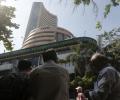
Reliance Industries was the top gainer in the Sensex pack, rising over 1 per cent, followed by M&M, HCL Tech, Axis Bank, ICICI Bank and HUL. On the other hand, Bharti Airtel, Maruti, SBI, PowerGrid, NTPC and Tata Steel were among the laggards.
Walmart is getting embroiled in one controversy after the other in India. Political parties in opposition are already rallying against FDI in retail. Can it still manage to launch its retail business successfully in the country?
